Rediscovering one of the most iconic music interfaces ever created.
For nearly two decades, music applications have steadily shifted toward efficiency. Lists became denser, navigation became faster, and algorithms became smarter. Somewhere along the way, however, we lost something that physical music collections naturally encouraged: browsing.
Album artwork became smaller. Discovery became textual. Music turned into searchable data rather than a visual collection.
That observation led me to build Spotify Coverflow—an open-source application that brings back one of the most memorable user interfaces in digital music history.
The source code for this project is available here:
https://github.com/8bitdev0x8/Spotify-Coverflow
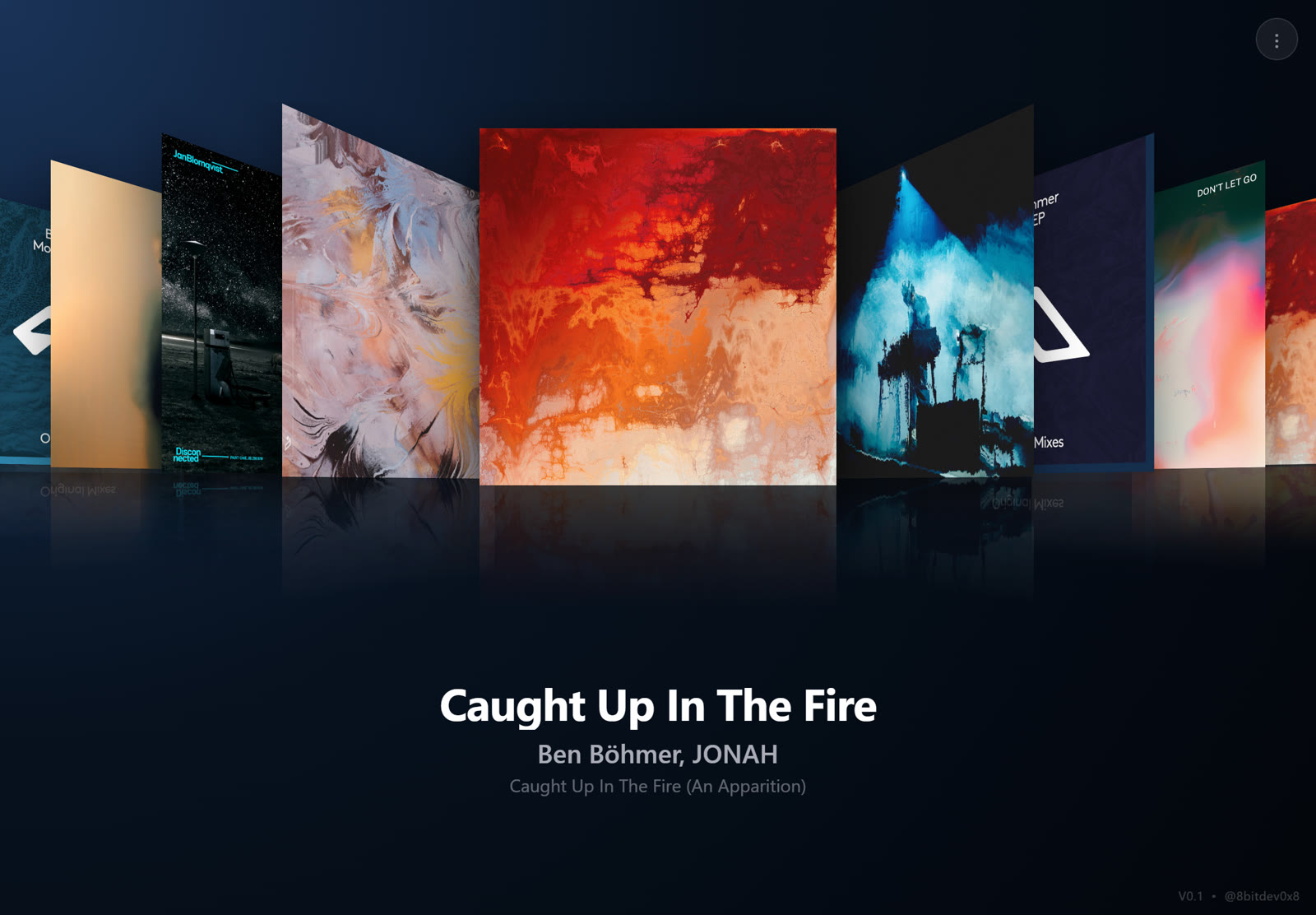
Spotify Coverflow in action — browsing a Spotify library through album artwork.
Introduction
Cover Flow is more than a nostalgic animation.
It represents a different philosophy of interacting with media—one where artwork becomes the primary navigation element instead of metadata.
Rather than scrolling endless rows of text, users flip through albums almost like browsing records in a music store.
Although the original UI disappeared from mainstream operating systems, its design principles remain surprisingly relevant today, especially with modern GPUs capable of rendering smooth 3D interfaces effortlessly.
Spotify Coverflow explores whether this interaction model still has value in today’s streaming-first world.
A Brief History of Cover Flow
Cover Flow began as a concept proposed by artist Andrew Coulter Enright in his 2004 blog post Dissatisfaction Sows Innovation, and was brought to life by developer Jonathan del Strother, whose standalone CoverFlow application for Mac OS X quickly gained attention as a visual browser for music libraries.
Apple recognized its potential, acquired the technology in 2006, and later secured a design patent for the interface (USD613300).
It first appeared in iTunes 7 before eventually becoming one of the defining interactions of the iPod Classic, where users could flip through album covers using the Click Wheel.
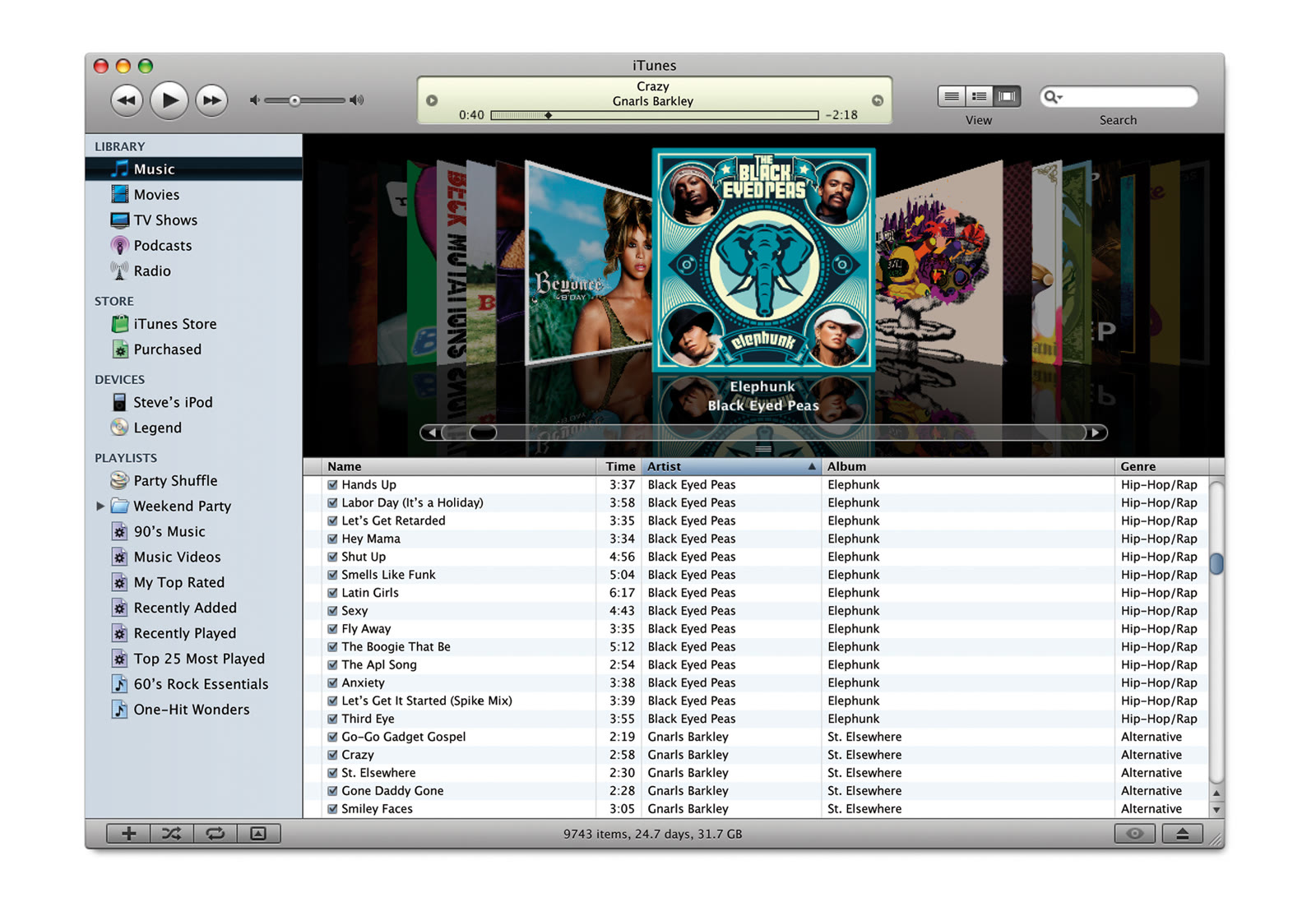
Cover Flow as it appeared in iTunes 7. Image via 512 Pixels.
Cover Flow’s biggest moment came in January 2007, when Steve Jobs introduced the original iPhone. When the user rotated the device into landscape orientation, the Music app would show the entire library’s albums in Cover Flow, and scrolling through them was as easy as the swipe of a finger. You can watch that moment from the keynote here.
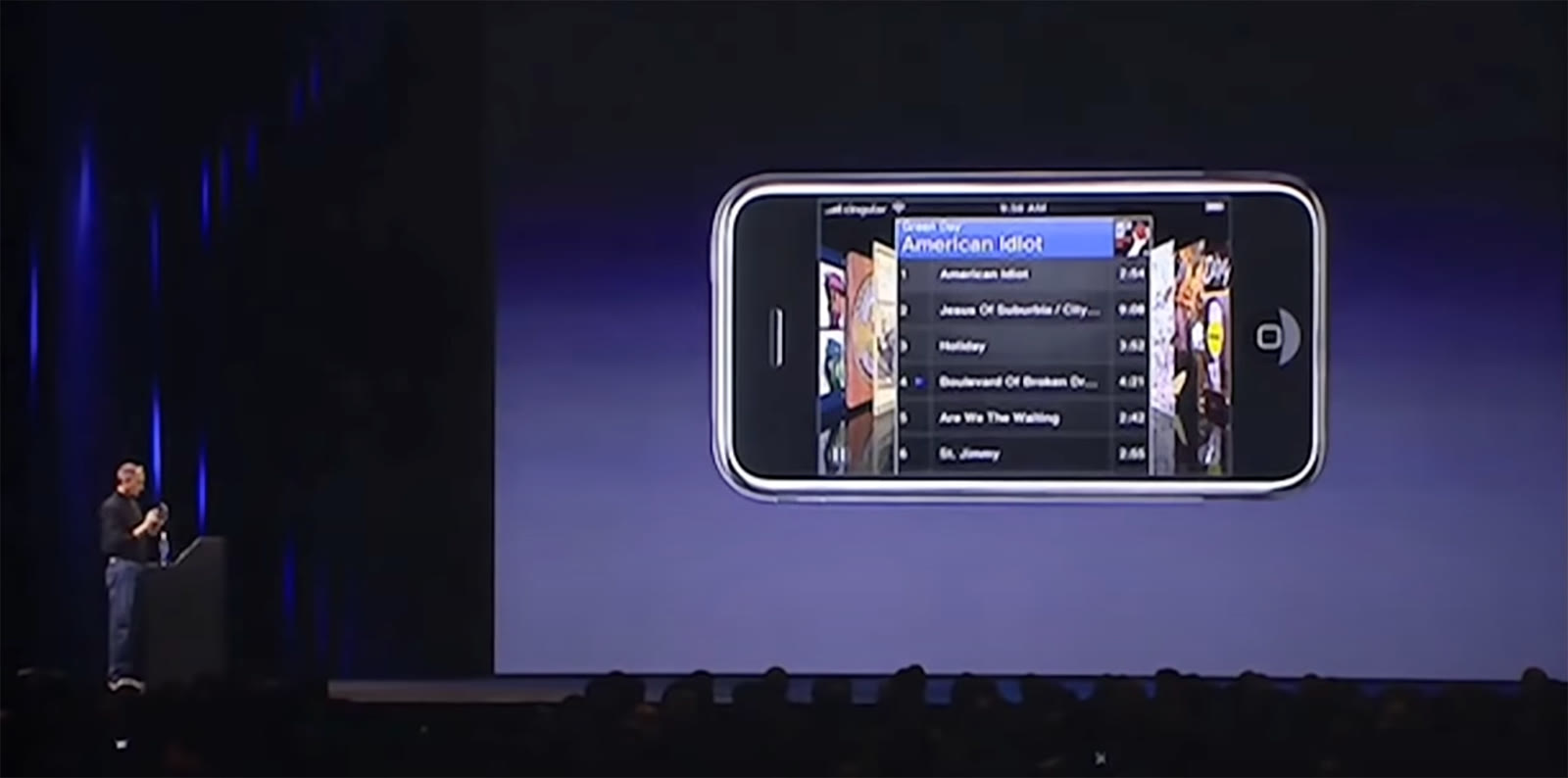
Steve Jobs demonstrating Cover Flow on the original iPhone at Macworld 2007. Image via 512 Pixels.
The interface transformed music libraries from static lists into something tactile and visual.
Instead of selecting albums by reading names, users recognized them instantly through artwork.
For many people, album covers became as memorable as the music itself.
Why Cover Flow Disappeared
Despite its popularity, Cover Flow slowly disappeared from Apple’s software ecosystem.
Several factors contributed to its decline.
1. Scale
Music libraries grew dramatically.
Scrolling through thousands of albums became slower than simply typing into a search box.
Search-based interfaces proved more efficient for large collections.
2. Mobile Design
Smartphones emphasized vertical scrolling and touch-first interactions.
Complex 3D interfaces consumed valuable screen space and computing resources, making simpler layouts more practical.
3. Flat Design
The design industry shifted toward minimalism.
Around 2013, skeuomorphic interfaces gave way to flat design languages focused on clarity and consistency.
Decorative visual effects—including Cover Flow—were often considered unnecessary.
4. Streaming Changed Discovery
Streaming services encouraged users to discover music through recommendations, playlists, and personalized feeds rather than browsing personal collections.
As recommendation engines improved, visual browsing became less central.
Why Cover Flow Still Matters
Although Cover Flow is no longer mainstream, its underlying ideas remain compelling.
Music is inherently visual.
Album artwork communicates mood, genre, identity, and artistic direction before a single note is played.
Browsing covers encourages exploration in ways that search boxes cannot.
Instead of asking users to know exactly what they’re looking for, Cover Flow rewards curiosity.
This makes it especially enjoyable for:
- rediscovering forgotten albums
- exploring artists visually
- appreciating album artwork
- recreating the feeling of browsing physical vinyl collections
Modern GPUs also remove many of the performance limitations that existed when Cover Flow was originally designed.
Why I Built Spotify Coverflow
Spotify provides access to one of the largest music libraries ever assembled.
Ironically, that enormous catalog is usually experienced through relatively conventional interfaces:
- lists
- playlists
- grids
- recommendations
I wanted to experiment with a different interaction model.
Instead of replacing Spotify, I wanted to build an alternative visualization layer that celebrates album artwork.
Spotify Coverflow is an exploration of questions like:
- Can visual browsing improve music discovery?
- Can nostalgia coexist with modern UX?
- Does album artwork deserve to be the primary interface again?
The project isn’t about recreating Apple’s interface pixel-for-pixel.
It’s about adapting an iconic interaction pattern for today’s streaming ecosystem.

The playback view — artwork stays front and center while a track plays.
Design Philosophy
Spotify Coverflow was built around several principles.
Music First
Album artwork should dominate the interface.
The UI should disappear behind the music collection itself.
Motion with Purpose
Animations are not decoration.
Movement communicates focus, context, and spatial relationships between albums.
Every transition should help users understand where they are in the collection.
Familiar but Modern
The interface draws inspiration from classic Cover Flow without attempting to become a museum piece.
Modern rendering techniques, responsive layouts, and contemporary development practices allow the concept to evolve.
Open Source
Making the project open source encourages experimentation.
Others can build upon it, improve performance, introduce new interaction models, or adapt it for entirely different music platforms.
Technical Goals
The project also serves as a technical exploration.
It investigates:
- GPU-accelerated UI rendering
- smooth animation pipelines
- Spotify API integration
- efficient album artwork loading
- responsive 3D layouts
- modern frontend architecture
Beyond nostalgia, it demonstrates how classic interaction models can be reimagined using today’s web technologies.
Looking Forward
User interfaces often move in cycles.
What once seemed outdated can become relevant again when technology catches up.
Mechanical keyboards returned.
Vinyl records returned.
Physical cameras returned.
Perhaps visually immersive media browsing deserves another chance as well.
Cover Flow reminds us that software isn’t only about efficiency.
Sometimes the journey of finding music can be just as enjoyable as listening to it.
Spotify Coverflow is my contribution to that idea.
Conclusion
Cover Flow wasn’t simply an animation.
It represented an era when software encouraged exploration through visuals rather than search.
While modern interfaces optimize for speed, there is still room for experiences that prioritize delight, discovery, and appreciation of music as visual art.
Spotify Coverflow is an experiment in bringing those ideas into the streaming era.
Whether Cover Flow becomes popular again isn’t the goal.
The goal is to ask whether we’ve lost something valuable by abandoning it.
Sometimes the best ideas don’t disappear.
They simply wait for the right time to return.
References
- GitHub Repository (Spotify Coverflow): https://github.com/8bitdev0x8/Spotify-Coverflow
- The History of Cover Flow — 512 Pixels: https://512pixels.net/2023/10/the-history-of-cover-flow/
- Dissatisfaction Sows Innovation — Andrew Coulter Enright’s original 2004 concept post (Internet Archive): https://web.archive.org/web/20050331055401/http://thetreehouseandthecave.blogspot.com/2004/12/dissatisfaction-sows-innovation.html
- iPhone Introduction, Macworld 2007 — Cover Flow demo (YouTube): https://youtu.be/VQKMoT-6XSg?t=961
- Apple’s Cover Flow design patent (USD613300): https://patents.google.com/patent/USD613300
- Cover Flow — Wikipedia: https://en.wikipedia.org/wiki/Cover_Flow
- The Rise and Fall of Cover Flow: A Design Perspective: https://alextheactualizer.com/ux-ui-blog-posts/the-rise-and-fall-of-cover-flow-a-design-perspective